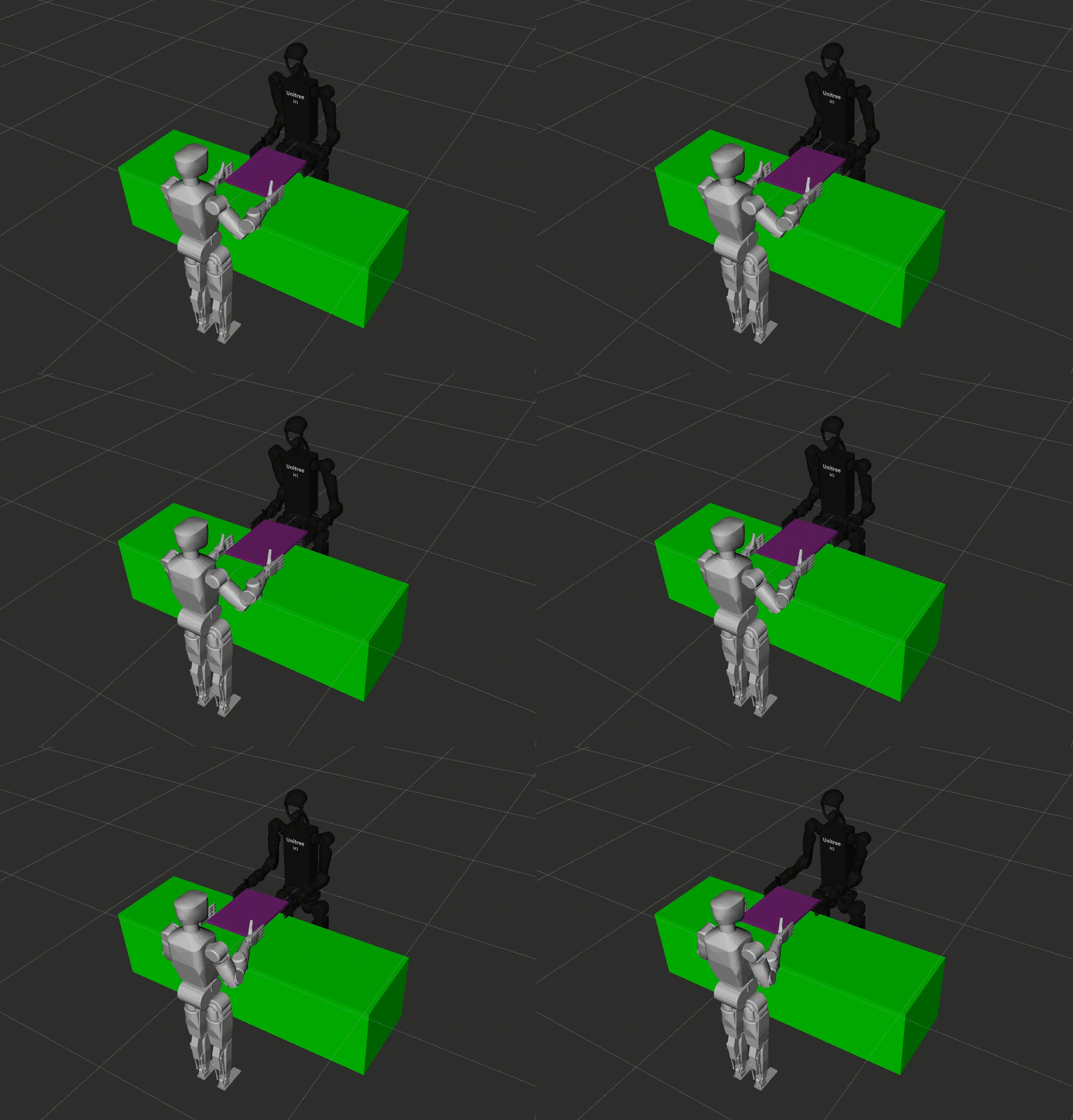
Video Summary
Abstract
This paper presents a motion planning framework that unifies equality and inequality constraints into a single geometric formulation for sampling-based planning in high-dimensional robotic systems. Conventional sampling-based planners often exhibit inefficient exploration because they treat constraints separately: equality constraints via projection and inequality constraints via binary collision checking. To address this issue, we propose Riemannian Barrier Metric RRT (RMRRT), which unifies both constraints into a single geometric formulation. RMRRT constructs a Riemannian barrier metric on the tangent space of the equality manifold by integrating the null-space projection of the constraint Jacobian with the Hessian of a logarithmic barrier function. This metric guides the tree expansion by selecting steering directions that minimize the induced Riemannian norm, thereby naturally avoiding inequality constraints while strictly adhering to the equality manifold. Experimental results demonstrate that RMRRT achieves a 100% success rate across diverse constrained manipulation tasks in both simulation and real-world experiments, while reducing planning time relative to state-of-the-art constrained planners. Ablation studies further show that the proposed barrier metric reduces sample rejection and shortens path length. Experiment videos and source code are available at: https://rcilab.github.io/rmrrt
Method Overview
RMRRT constructs a Riemannian barrier metric on the tangent space of the equality-constrained manifold that encodes the local geometry induced by inequality constraints. This metric is integrated into both steering and nearest-neighbor selection, enabling inequality-aware exploration while strictly maintaining equality-manifold feasibility.
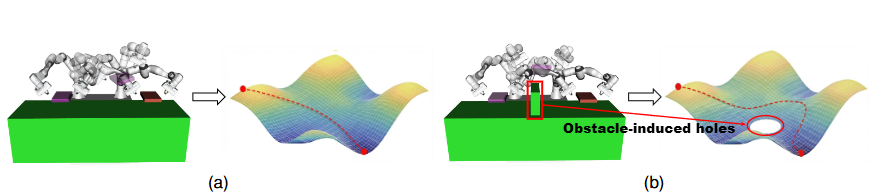
(a) Equality-constrained manifold under full admissibility. (b) The same manifold with infeasible regions (holes) induced by inequality constraints. RMRRT accounts for this geometry through a Riemannian metric defined on the tangent space.
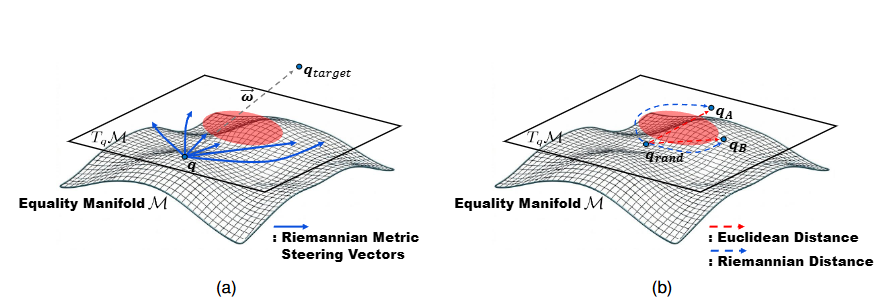
(a) Metric-induced tangent-space steering biases expansion away from inequality boundaries. (b) Riemannian nearest-neighbor selection favors nodes that admit feasible, low-cost motions toward the target.
Results
RMRRT achieves 100% success rate across all scenarios while maintaining the lowest mean planning time compared to five state-of-the-art baselines. Each scenario was evaluated over 100 trials with a 300s timeout.
| Planner | Scenario 1 | Scenario 2 | Scenario 3 | Scenario 4 | ||||
|---|---|---|---|---|---|---|---|---|
| Time (s) | Succ. | Time (s) | Succ. | Time (s) | Succ. | Time (s) | Succ. | |
| CBiRRT | 0.35 ± 0.41 | 100% | 2.97 ± 4.48 | 100% | 3.06 ± 4.27 | 100% | 74.75 ± 118.59 | 90% |
| Atlas RRT | 5.84 ± 12.63 | 100% | 48.55 ± 85.13 | 83% | 35.12 ± 69.27 | 89% | 10.02 ± 31.80 | 89% |
| TB-RRT | 5.74 ± 16.75 | 100% | 37.71 ± 86.93 | 80% | 48.83 ± 86.27 | 87% | 15.80 ± 57.35 | 84% |
| PG-RRT | 2.65 ± 6.64 | 100% | 4.49 ± 5.43 | 100% | 5.51 ± 10.41 | 100% | 32.37 ± 81.47 | 97% |
| LJCMP | 0.41 ± 1.02 | 100% | 0.24 ± 0.53 | 100% | 0.48 ± 1.56 | 100% | 0.55 ± 1.69 | 100% |
| RMRRT (ours) | 0.32 ± 0.34 | 100% | 0.18 ± 0.15 | 100% | 0.25 ± 0.26 | 100% | 0.38 ± 0.51 | 100% |
Result Video
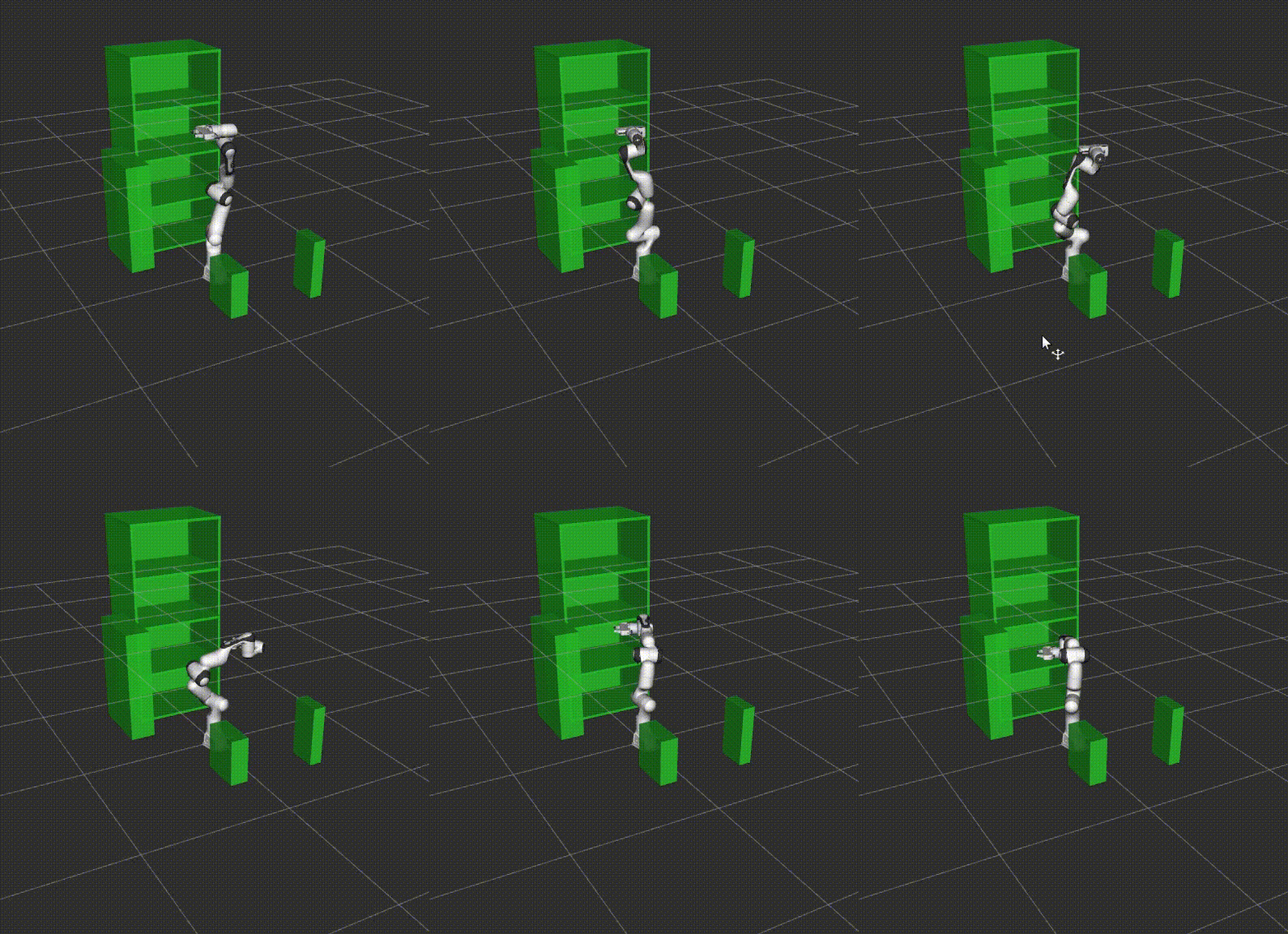
Single-arm cabinet reaching under a fixed end-effector orientation constraint (Scenario 1).
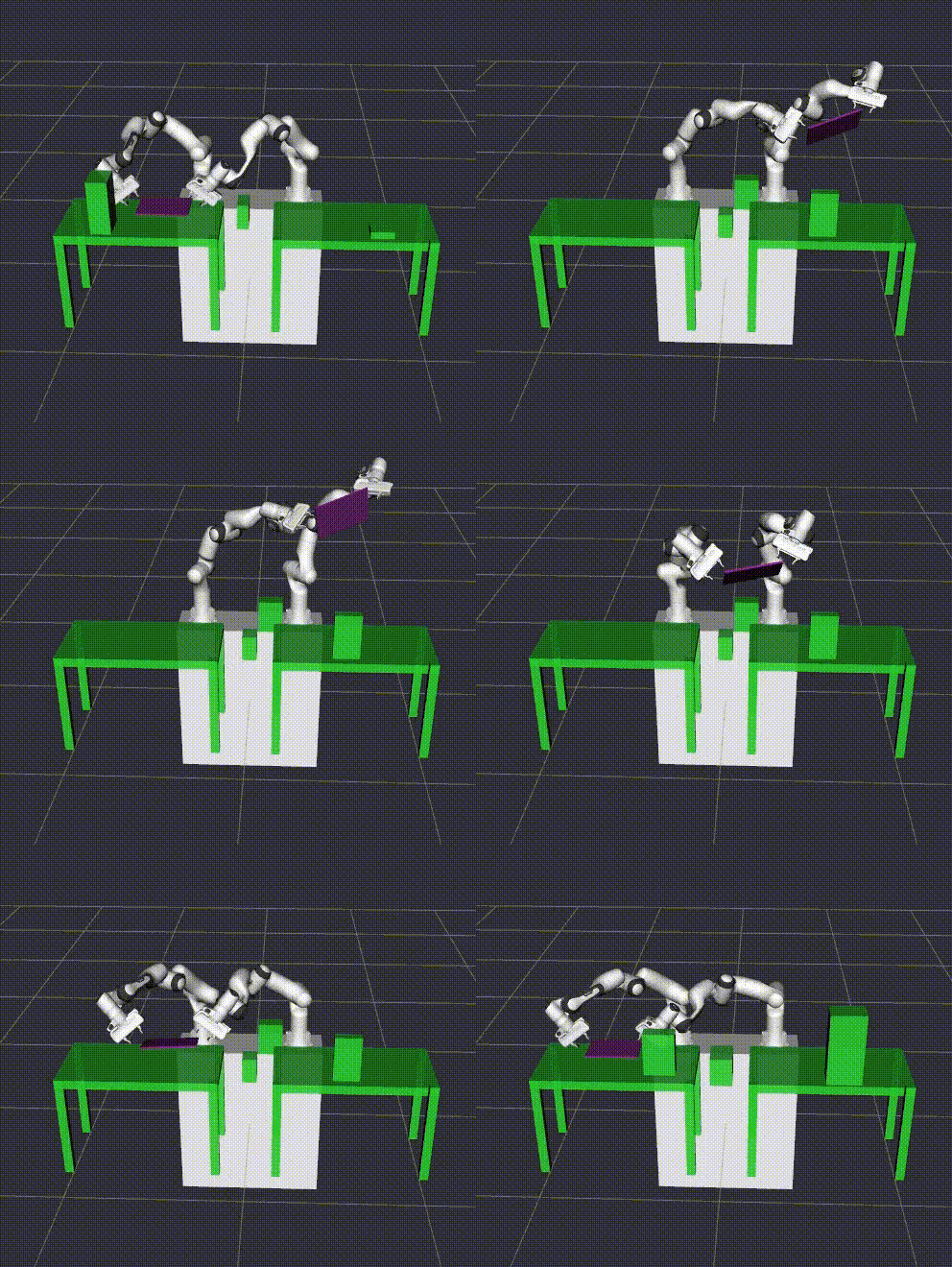
Dual-arm constrained transfer (Scenario 2).
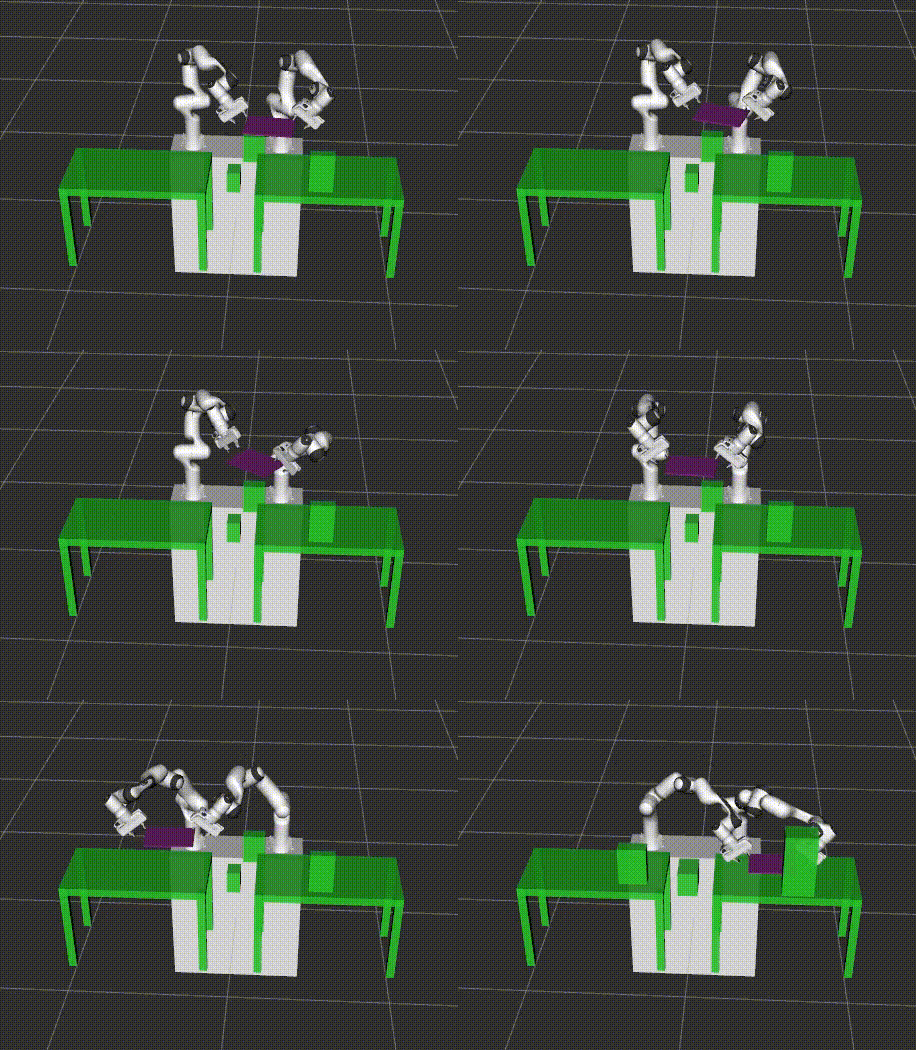
Dual-arm constrained transfer with a fixed orientation constraint (Scenario 3).
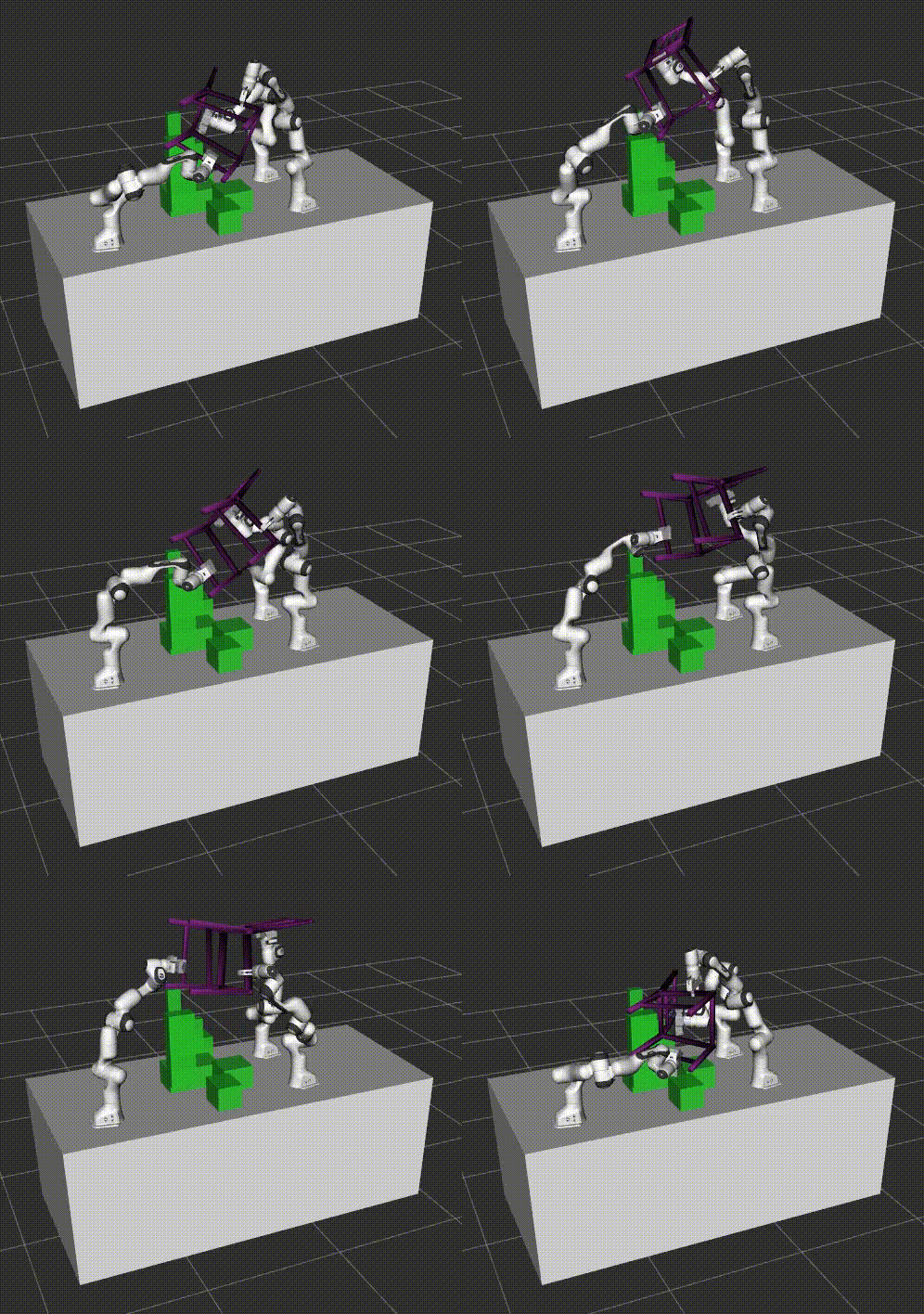
Triple-arm cooperative manipulation under closed-chain grasp and collision avoidance constraints (Scenario 4).
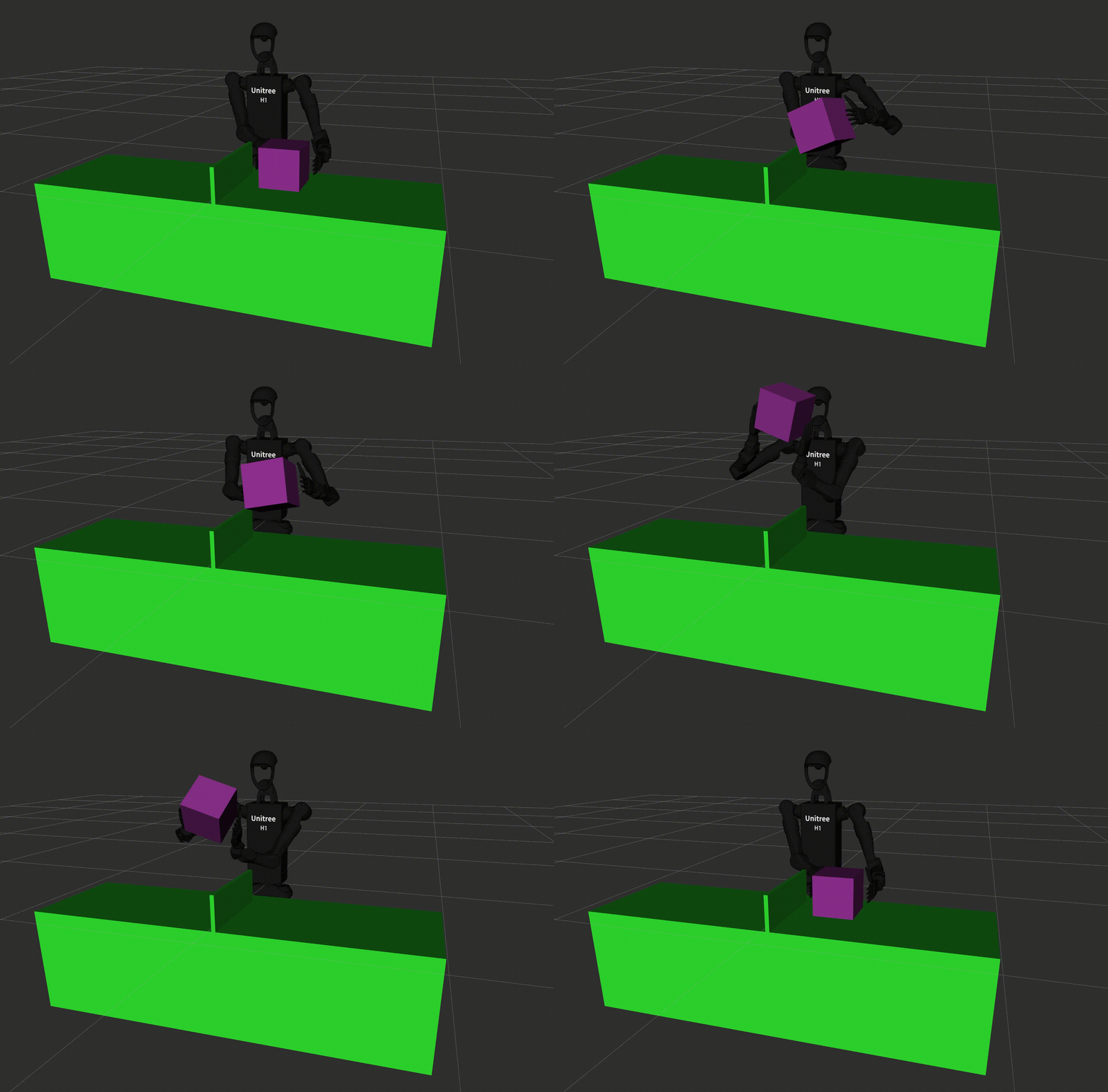
Unitree H1-2 humanoid dual-arm constrained transfer.